Our story
The lift I always needed.
This isn't medical advice. This is my experience as I lived it.
Our story
This isn't medical advice. This is my experience as I lived it.
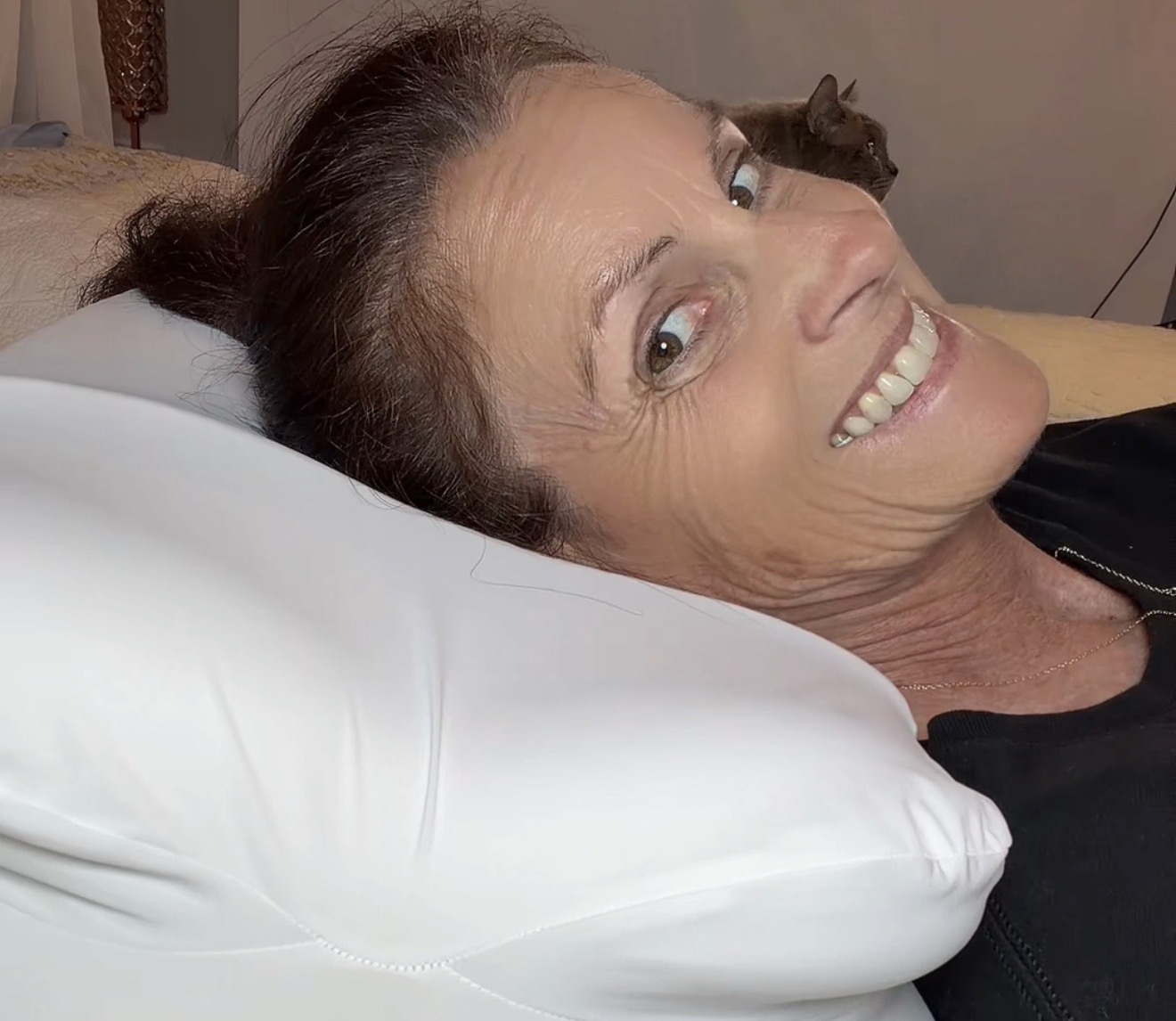
Before my surgery, I began noticing a pattern I couldn't ignore. When I laid back with my neck resting against a pillow, my symptoms got worse — not better. Not when I turned my head. Not when I moved suddenly. Just lying back.
At the time, no one explained that this mattered. I was doing what most of us are told to do: use a "good" pillow, support the neck, rest. But my body kept telling me a different story, and it wasn't subtle.
Over time, I noticed that lying back with my neck pressed into a pillow often triggered:
What stood out most was where the pressure was. It wasn't pain in the neck itself — it was the feeling that my head had nowhere to go except down and back.
Most pillows, including high-end and cervical designs, are built around one core assumption: if you support the neck, the head will take care of itself.
I knew that wasn't right for me. And I wondered — could it also be happening to others? When my head sank into the pillow and my neck was pushed upward or backward, everything above my neck felt overloaded. The more the pillow tried to "hold" my neck, the worse my tolerance became.
Out of necessity, I started experimenting. Instead of adding more support under my neck, I focused on supporting the crown of my head — just enough to prevent it from sinking or dropping backward.
The effect was immediate and unmistakable. When my head was supported first:
It wasn't about firmness. It wasn't about posture correction. It was about where the weight of my head was going.
The head is heavy — 10 to 12 pounds heavy. When it's allowed to sink or tilt backward, the neck compensates, especially when the body is already sensitive or under stress. By supporting the crown of the head, head weight is redistributed, the neck is allowed to rest instead of brace, and overall alignment can settle naturally.
For me, it wasn't a comfort upgrade — it was a functional difference. And it explained why so many pillows that were supposed to help had actually made things worse.
The Crown Lift® support insert name is inspired by a posture cue many yoga instructors, Pilates teachers, and physical therapists use — imagining a lift through the crown of the head to create length and ease compression. It's a cue for when you're awake and in control.
Crown Lift® was built for the hours when you're not — while you sleep, when your muscles relax and your pillow takes over the job your posture was doing all day.
I want to be clear about something important: this understanding came before surgery, and it remained relevant after. Getting back to normal changes how the body tolerates pressure. What once felt "supportive" can suddenly feel overwhelming. Having the ability to adjust head support without forcing the neck became essential.
That's ultimately what led me to create the Crown Lift® — not as a pillow replacement, but as a head support system that works inside any pillow.
I'm sharing because I know how confusing it is when:
That realization — that head support mattered more than neck support — changed everything for me. It's what this whole thing is about.
— Danielle Canter, Founder
Once I realized head support mattered more than neck support for me, I assumed someone in the medical world would confirm it. They didn't.
I brought it up cautiously at first. I didn't want to sound dramatic. I simply explained what I was experiencing: that lying back increased symptoms, that pillows made things worse, that supporting the crown of my head reduced pressure and improved tolerance.
The responses were almost always the same:
None of those answers explained why my body reacted the way it did. And none of them addressed the pattern.
When your spine has been injured, destabilized, or surgically altered, the rules change. What most people experience as gentle support can feel like overload when your system is already compensating.
I wasn't looking for comfort. I was looking for tolerance. There's a difference. Tolerance is being able to lie back without triggering dizziness, pressure, or autonomic responses — versus feeling like your body is shutting down. And tolerance was directly tied to what happened to my head when I rested.
One of the most frustrating parts of this journey was being told to rest — when rest itself was the problem. Lying down wasn't neutral for me. It was provocative.
You start avoiding positions. You stack pillows. You sleep half-upright. You wake up worse than you went to bed. And eventually, you stop trusting your body — or yourself.
At some point, I stopped Googling. I stopped asking forums for the "best pillow." I stopped buying the next solution that promised relief. And I started paying attention to cause and effect.
The pattern became undeniable:
No pillow had ever been designed to account for that distinction. The problem wasn't just my body — the system itself was incomplete.
I didn't set out to build a business. I wasn't trying to disrupt an industry. I was trying to survive my own body. The Crown Lift® concept didn't come from innovation meetings or market research. It came from asking one stubborn question over and over:
Why does this help when nothing else does?
Once I understood that, I couldn't unsee it.
Surgery didn't reset my body. It changed it. And one of the biggest surprises was how differently my body responded to pressure afterward — especially when lying down.
What once felt tolerable suddenly wasn't. What used to feel supportive now felt overwhelming. Getting back to feeling like yourself doesn't happen overnight — the body often becomes more sensitive before it becomes more stable.
Fixed shapes don't adapt when your body changes. Firmness alone doesn't account for sensitivity. And neck-first support can become too aggressive when the body is especially sensitive.
A pillow that works for you one month may not work the next. Some days I needed less lift. Some days I needed more. Some days I needed support in a slightly different place altogether. No single pillow could do that.
Sensitive bodies need options. Not a new pillow every time something changes. They need a way to adjust head support without disturbing the neck:
That's when the Crown Lift® system stopped being an idea and became a necessity. Not because I wanted to invent something, but because nothing else existed that allowed this level of control.
I'm not sharing this from the other side of everything being fixed. I'm sharing it while still learning. Still adjusting. Still listening. I have four daughters who need to see that their Mom didn't just overcome — she fought back, and continues to fight so others won't have to struggle like she did.
Support that cannot change will eventually fail a body that does. If you're getting back on your feet after surgery, an injury, or chronic instability, and lying down feels harder than it should — there may be nothing wrong with you. You may simply need support that meets you where you are today.
I pray my girls see a woman who challenged medical authority for her own good. Who didn't let the idea of being like this forever keep her sad and scared. Who fought to be heard, created the solution that never existed, and brought it to the world. And I pray it helps other women see that we can do anything we set out to do — even while in the mess of it.
— Danielle
Everything I learned along the way became the Crown Lift® System — the adjustable support insert set that upgrades the pillow you already own.
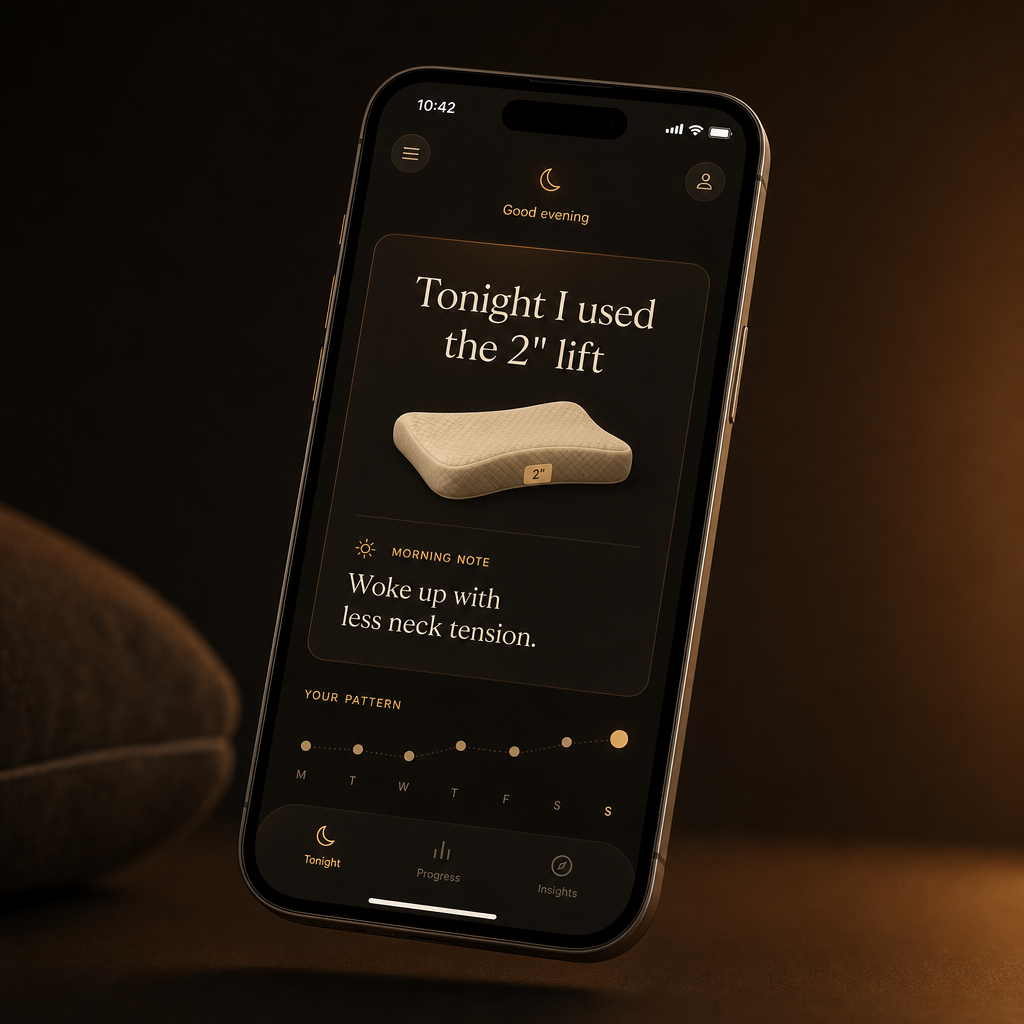
Included With Crown Lift® · The Clueless House™
Every Crown Lift® system includes access to The Clueless House app. Log your sleep, note what height feels right, and build a routine that actually sticks.
Free · Daily sleep notes · Find your fit
Download on the App Store →Get sleep tips + be first to know about new products.